Expensive Materials, Tight Margins
Graphite for electrode applications can cost several hundred euros per kilogram, depending on its grade. Advanced technical ceramics such as silicon carbide (SiC) or aluminum nitride (AlN) are even more expensive. With material costs at this level, every unnecessary millimeter of wasted material has a direct impact on production costs.
The Impact of Kerf Width
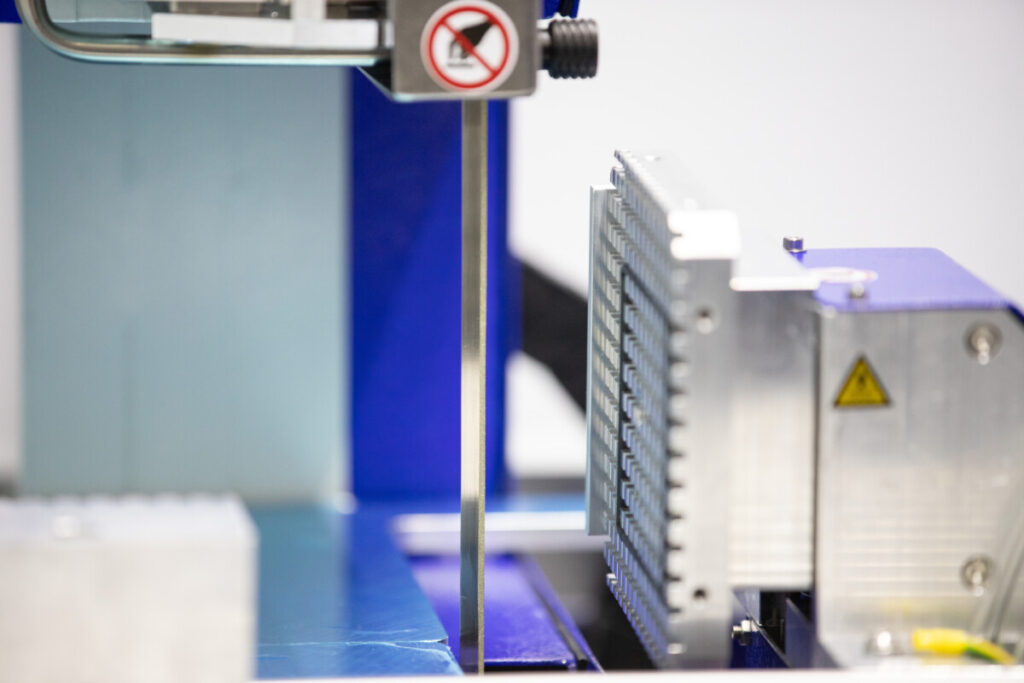
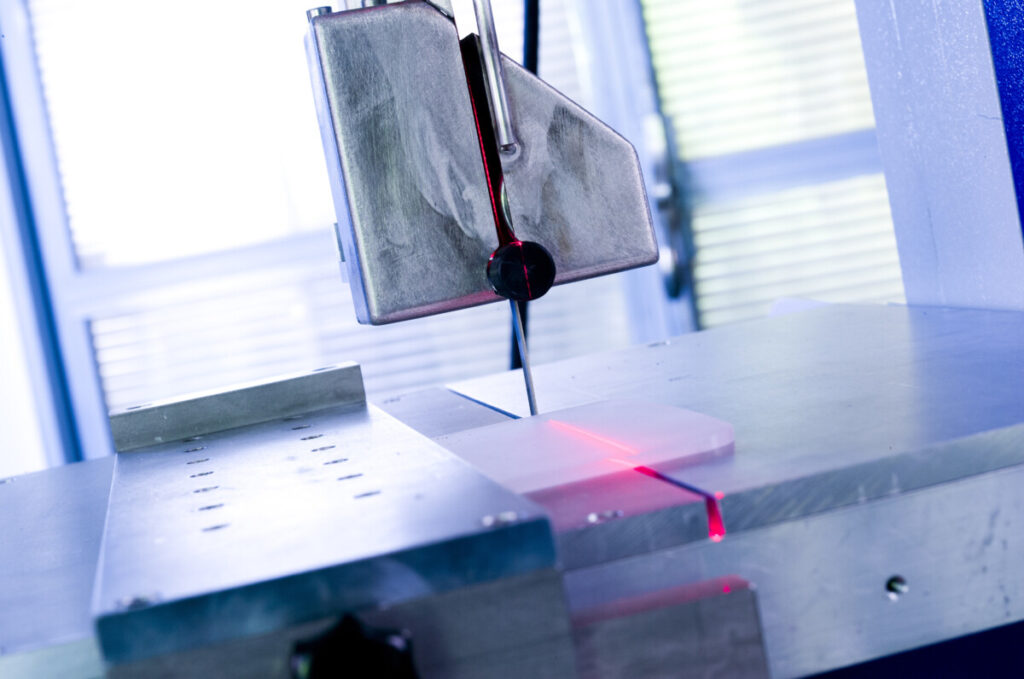
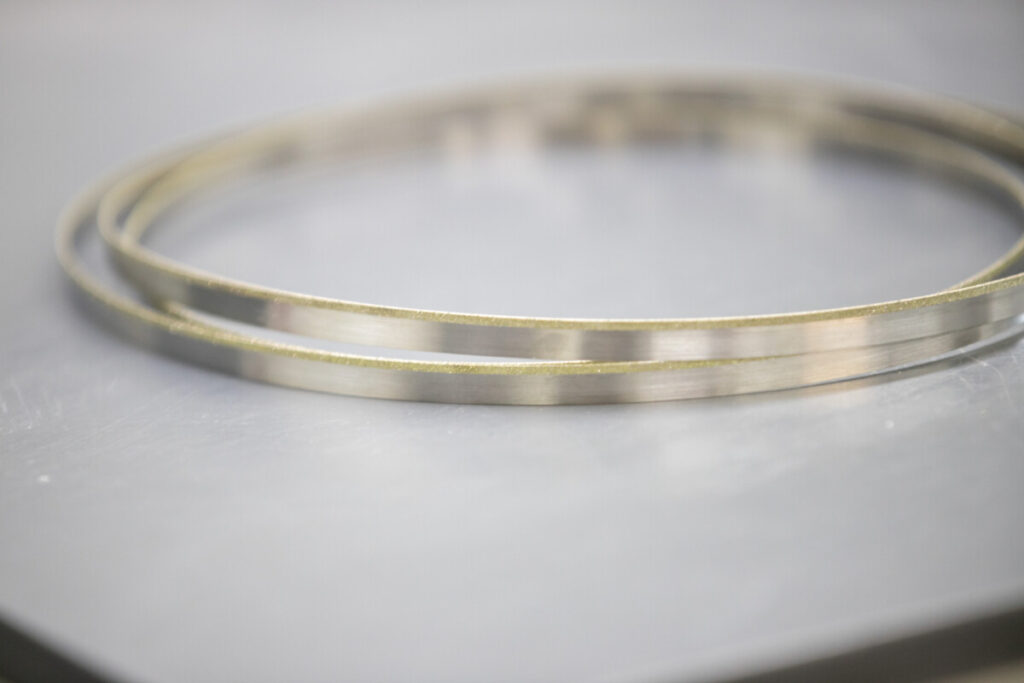
Kerf width—the amount of material lost during cutting—varies significantly depending on the cutting technology used. Conventional diamond cutting discs typically produce kerfs between 1 and 3 mm. In contrast, DRAMET diamond band saws achieve kerf widths of just 0.45–0.85 mm—a significant difference that directly improves material yield.
Example Calculation: SiC Block, 100 mm High, 10 Slices
• Conventional cutting (2 mm kerf): 18 mm material loss = 18% of the block
• DRAMET (0.3 mm kerf): 2.7 mm material loss = 2.7% of the block
• Material savings per block: More than 85% less cutting waste
Additional Factors Improving Material Efficiency
• Chip-free cut edges – less rework and reduced scrap
• Reproducible dimensional accuracy – consistent part geometry without excessive machining allowances
• Gentle machining – no thermal damage requiring additional post-processing
Conclusion
Companies machining high-value materials should view cutting technology as a key driver of cost efficiency. With DRAMET diamond band saws, you maximize the yield from every raw block—measurably, economically, and sustainably.
Contact us for a consultation on improving material efficiency in your manufacturing processes.