Small batch sizes, customer-specific variants, and frequently changing materials characterize many manufacturing environments today. What used to be the exception has become standard practice—in research, custom manufacturing, and increasingly in series production. The challenge is clear: despite high variability, quality, dimensional accuracy, and process reliability must remain consistent.
When variability becomes a burden on processes
Frequent material changes mean changing properties: hardness, brittleness, abrasiveness, and thermal conductivity can vary significantly. If cutting processes are not specifically designed to handle this, results quickly become unstable. Parameters must be constantly adjusted, tool life fluctuates, and scrap increases. Especially when machining sensitive materials such as graphite, ceramics, glass, or composite materials, even minor uncertainties directly affect cutting quality.
Stable processes as the constant in variability
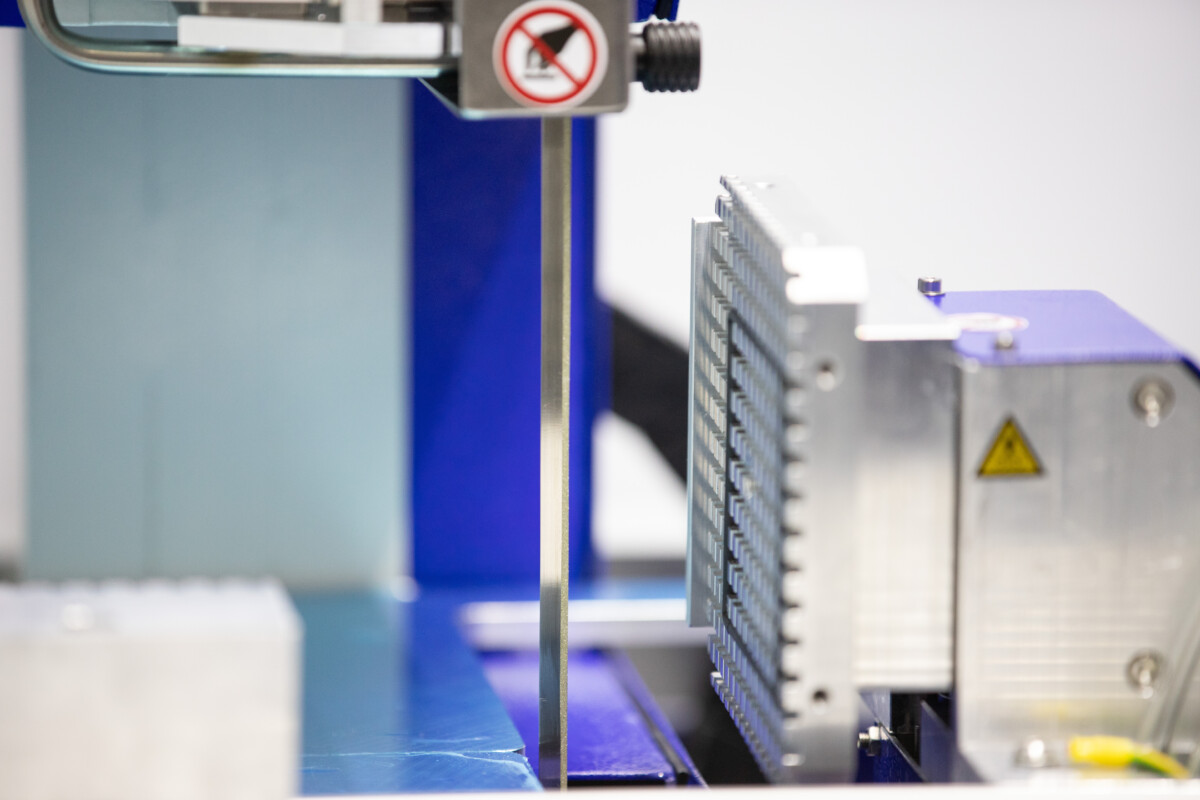
The key to managing high product variability is not developing new individual solutions for each case, but establishing stable and reproducible processes. DRAMET diamond band saws are designed to machine different materials using clearly defined and repeatable procedures. Reproducible cutting movements, precise band guidance, and controlled cutting pressure ensure that material changes do not lead to fluctuations in quality.
Fast changeovers without loss of quality
Flexibility must not come at the expense of quality. With NC control systems, material-specific programs can be stored and quickly accessed when needed. Clamping solutions and machine concepts are designed to minimize setup times while ensuring secure fixation. This allows materials to be changed without having to “reinvent” the process each time.
Reduced dependence on operator expertise
In highly variable production environments, dependence on experienced personnel often increases. Stable processes reduce this dependency. When parameters are clearly defined, monitored, and reproducible, quality remains consistent regardless of shift or operator. This increases process reliability and simplifies the training of new employees.
Efficiency despite complexity
Product variability increases complexity—but not necessarily costs. Companies that control scrap, rework, and downtime can maintain economic efficiency even with frequent material changes. Precise cuts with narrow kerfs, minimal post-processing, and predictable tool life ensure that even small batch sizes remain efficient.
Conclusion
Product variability is here to stay. The key is how well it is managed. With stable and reproducible cutting processes, even frequently changing materials can be machined with consistent quality. DRAMET supports companies with precise machine technology, well-designed process concepts, and extensive experience from numerous high-variability applications.
Contact us for a non-binding consultation on how to maintain quality and efficiency even in highly variable production environments.