
Piezoelectric Ceramics: Functionality and Sensitivity
Piezoelectric ceramic materials such as lead zirconate titanate (PZT) and barium titanate convert mechanical pressure into electrical voltage—and vice versa. They are widely used in ultrasonic transducers, actuators, medical devices, pressure sensors, and precision positioning systems.
Their piezoelectric properties result from a specific crystal structure and polarization state, which can be permanently damaged by excessive heat or mechanical stress.
Challenges in Machining Piezoelectric Ceramics
- Excessive heat above the Curie temperature (approx. 200–350 °C) – destroys the material’s polarization and piezoelectric properties
- High cutting pressure – causes microcracks and residual stresses within the material
- Edge chipping – can negatively affect electric field distribution and component performance
- Contamination with metallic particles – may alter the material’s electrical properties
The DRAMET Solution
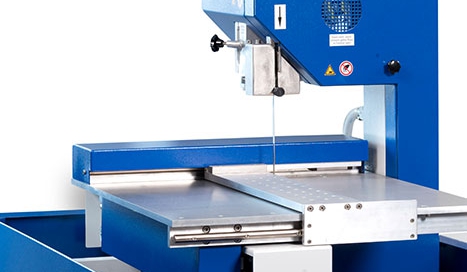
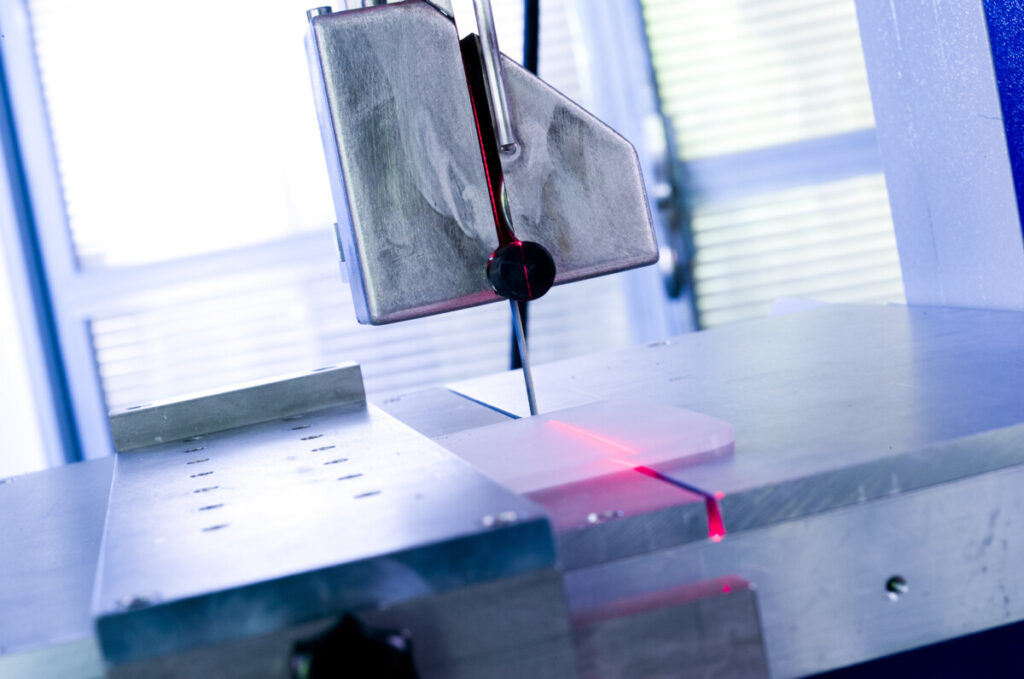
With minimal cutting pressure (0.5–4 N), fine-grit diamond saw bands, and optional water cooling, DRAMET enables gentle and precise cutting of piezoelectric ceramics.
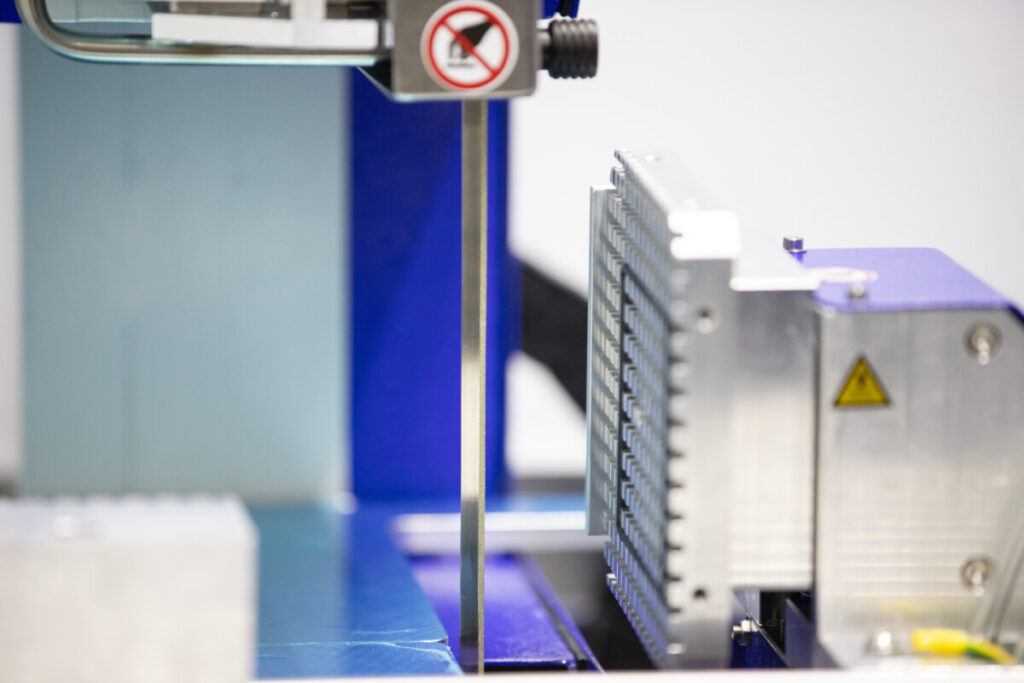
Low heat generation helps protect the temperature-sensitive crystal structure and preserve the material’s piezoelectric properties. Integrated extraction systems minimize the risk of particle contamination during machining.
The combination of controlled cutting forces, optimized tooling, and reliable process parameters ensures high cutting quality while reducing the risk of material damage.
Conclusion
Piezoelectric ceramics are too valuable and too critical to component functionality to compromise on machining quality. DRAMET provides precision cutting solutions designed to preserve material properties—accurately, gently, and reproducibly.
Contact us for a non-binding consultation on precision machining solutions for piezoelectric ceramics.